Qantara \\ DUBAI URBAN ELEMENTS DESIGN CHALLENGE \\ Shortlisted
Location:
Dubai, UAE
Category:
Team:
Hasan Hashas, Ahmed Alsalhi, Fares Whby
This project proposes a strategic approach to urban intervention in Dubai, moving beyond isolated object design to prioritize a cohesive spatial narrative and the human scale within a car-oriented, vertical city. It identifies Dubai’s identity as a dynamic balance between temporality and permanence, necessitating interventions that are materially efficient and spatially impactful across its seven zones.
The core design element is the modular archetype, Qaws Muthallath, which integrates cultural heritage (resilience, evolution) into spatial structures. This is not about ‘furniture,’ but about composing systems—generating paths, shading, and edges—to reinforce inclusion, comfort, and perception of place. The Qaws Muthallath acts as a catalyst by improving microclimate (water and green expansion) and program flexibility.
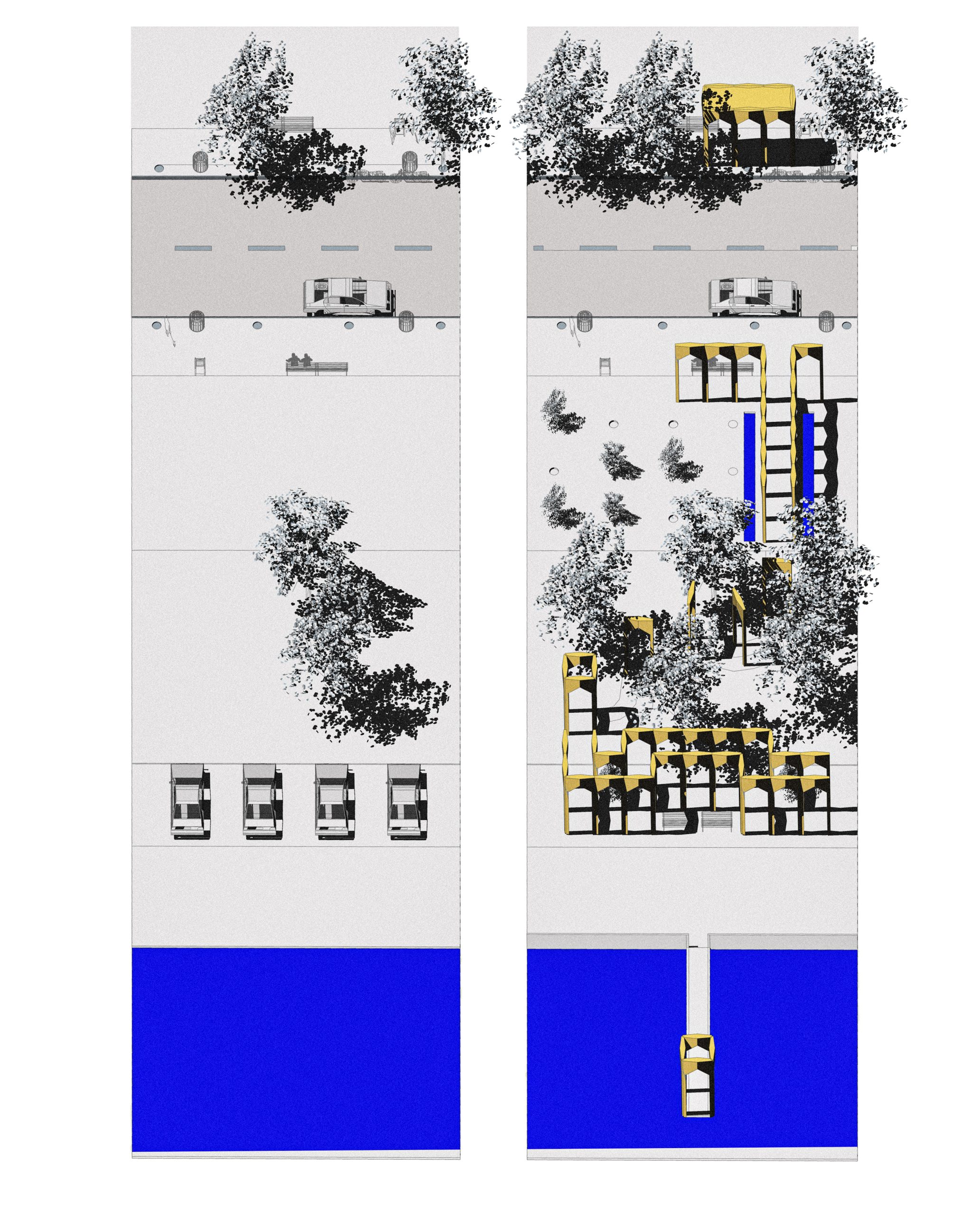
The Qaws Muthallath is a versatile modular archetype that strategically transforms diverse underutilized urban spaces—including sidewalks, parks, parking lots, and waterfronts—by integrating shading, greenery, and water elements to establish new edges, reclaim neglected areas, and enhance public comfort and spatial perception across Dubai’s landscape.
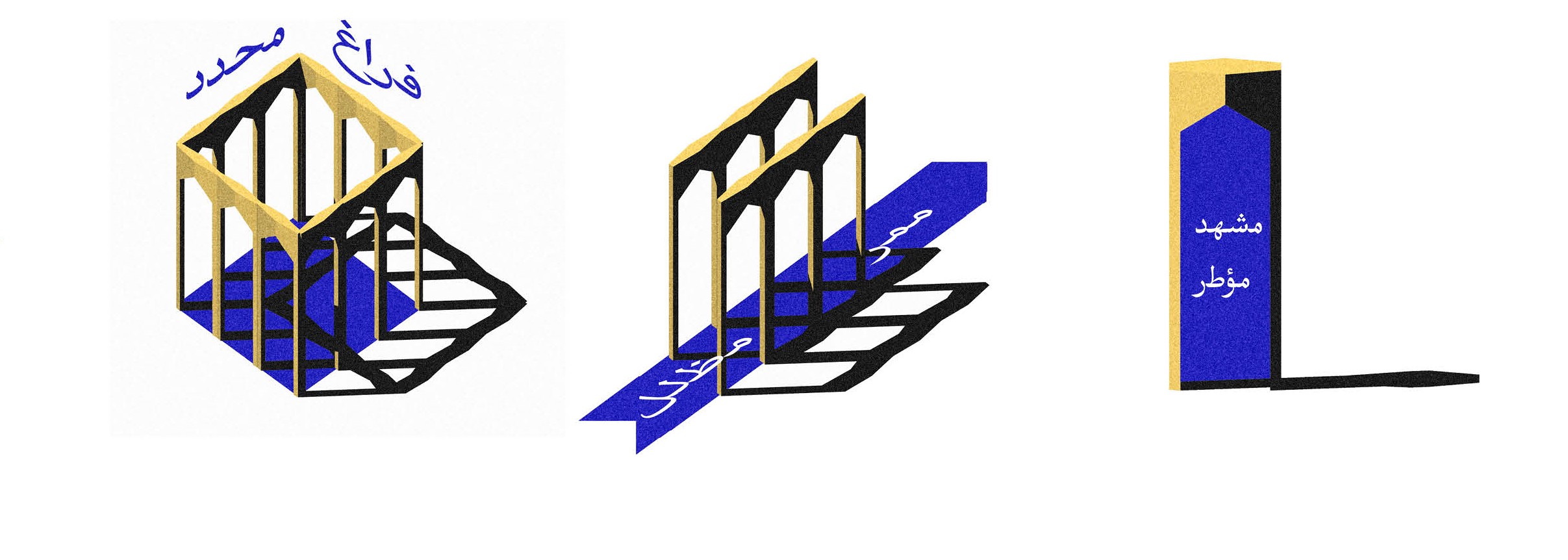
Integrating water, the emblem of urban resilience, allows for natural evaporative cooling through shaded arches to enhance comfort, while urban staircases function as rhythmic pauses, becoming gathering spaces that foster social connection.
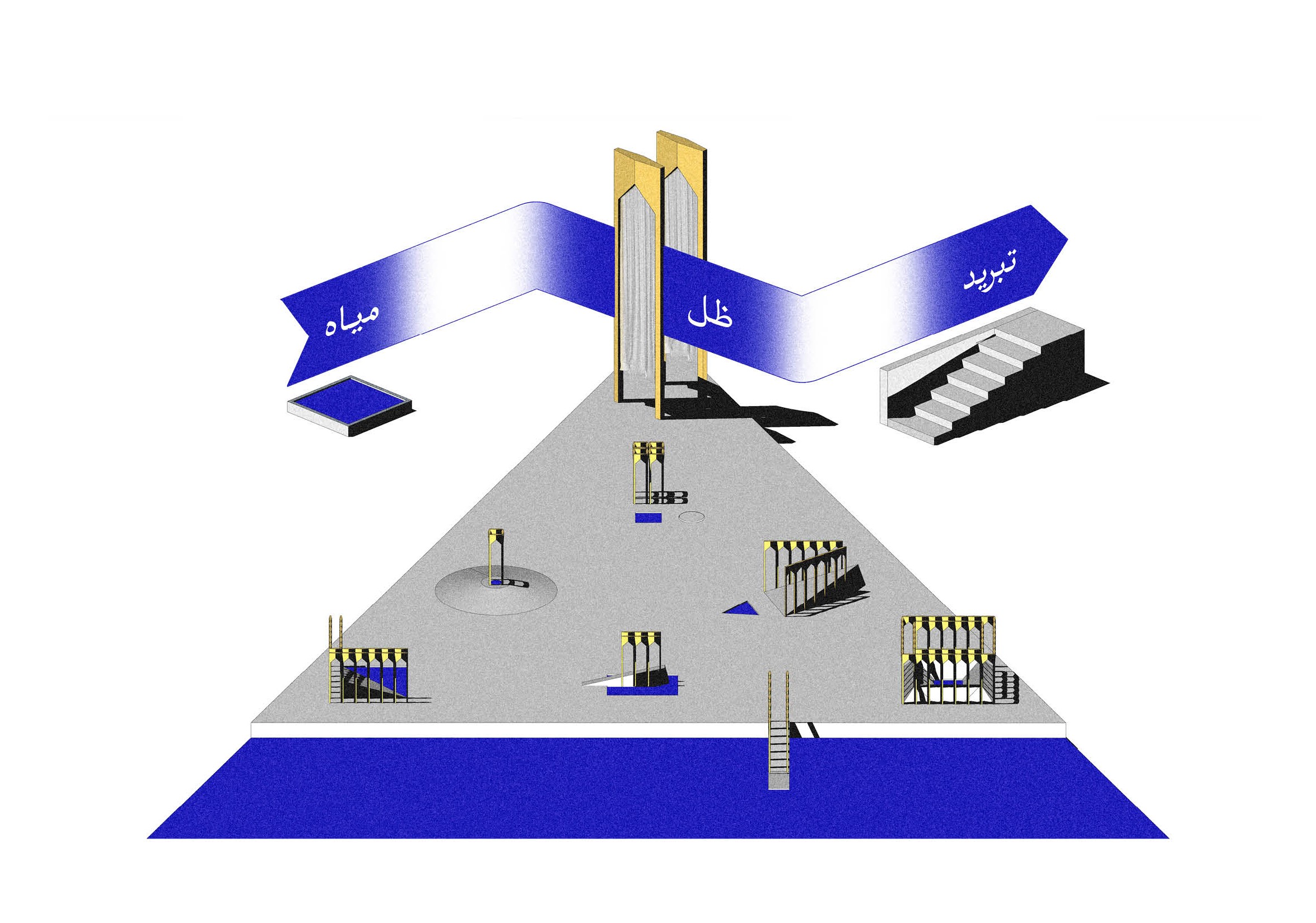
Introducing human-scale passages creates intimate urban experiences with communal living room spaces, while the repetition of modular elements forms shaded corridors that guide movement and act as portals, framing the city through carefully composed views.
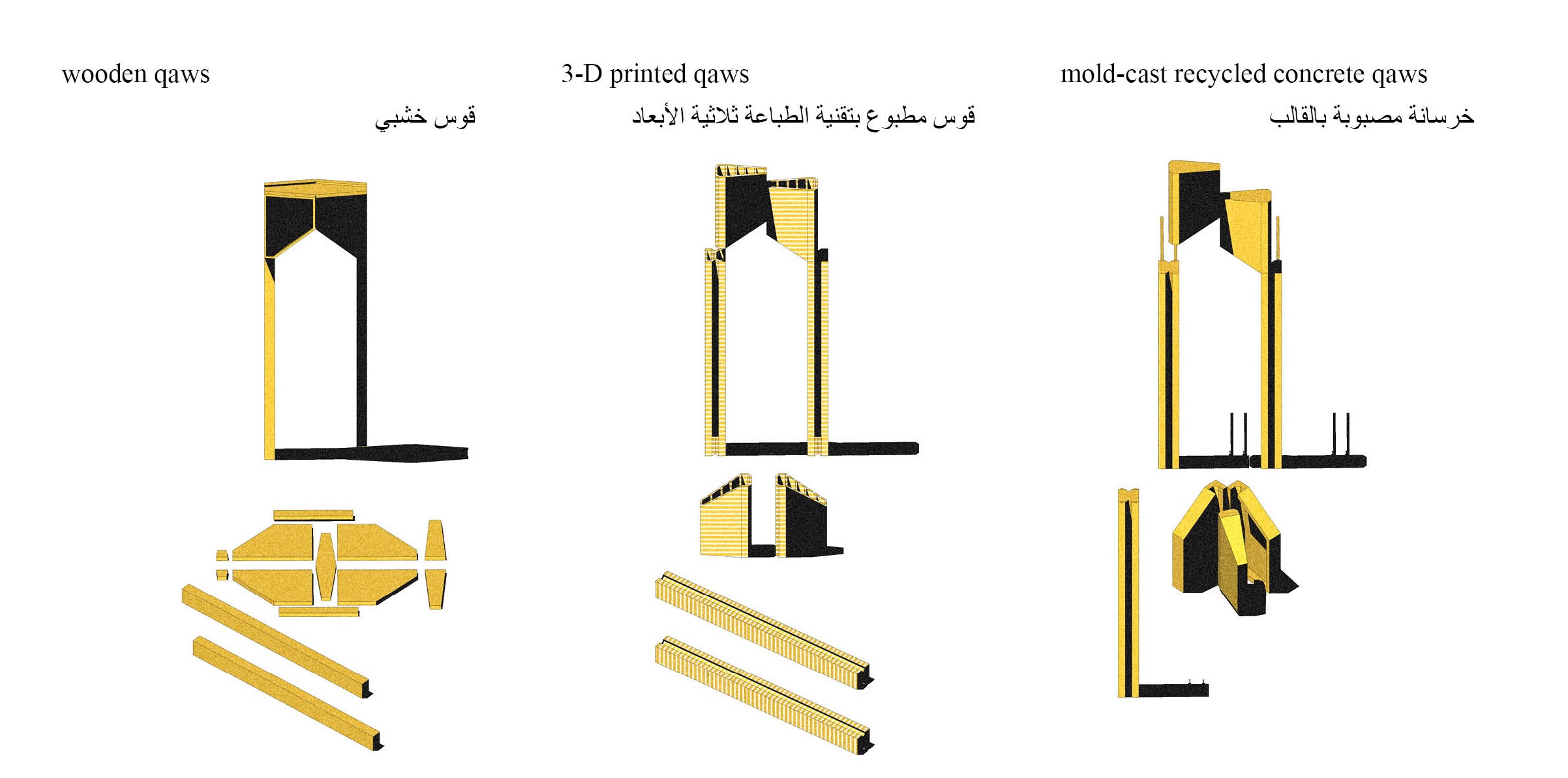
The Qaws Muthallath utilized wood, 3-D printed materials, and mold-cast recycled concrete for material efficiency, ensuring a durable, modular design tailored for spatial impact across Dubai’s seven zones.
Strategic placement is guided by a Space Syntax Angular Integration analysis, which reveals high latent spatial importance in “backs” of the city (underutilized, inaccessible areas). By targeting these crucial yet neglected connectors, the intervention ensures maximum impact. The resulting human-scale passages transform these areas into “communal living rooms,” weaving new social energy and continuity, and ultimately framing the city’s diverse landscapes through thoughtful, context-amplifying design.
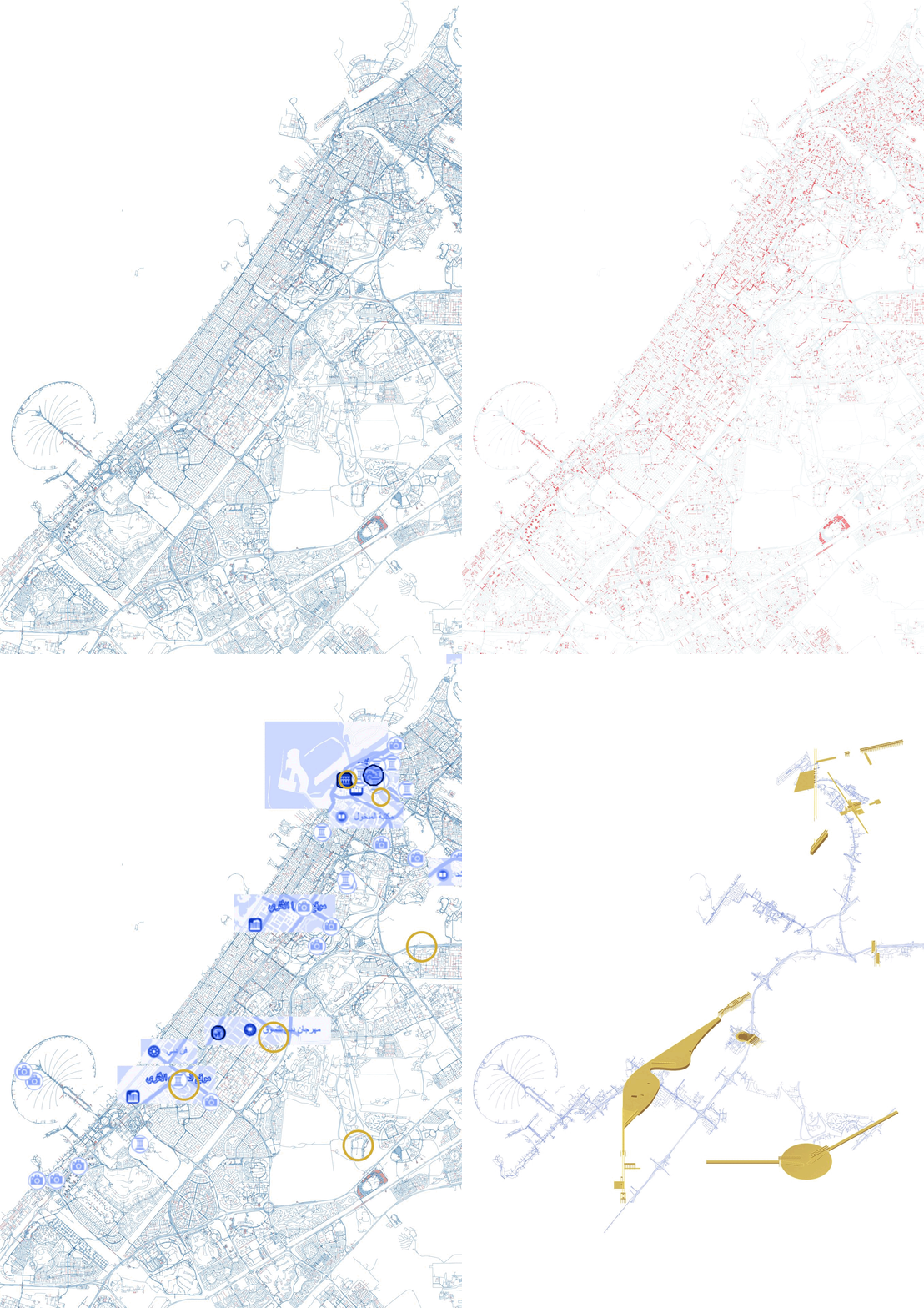
Site Selection Process Based on Analyzing Underutilized Spaces and Mapping of Activity
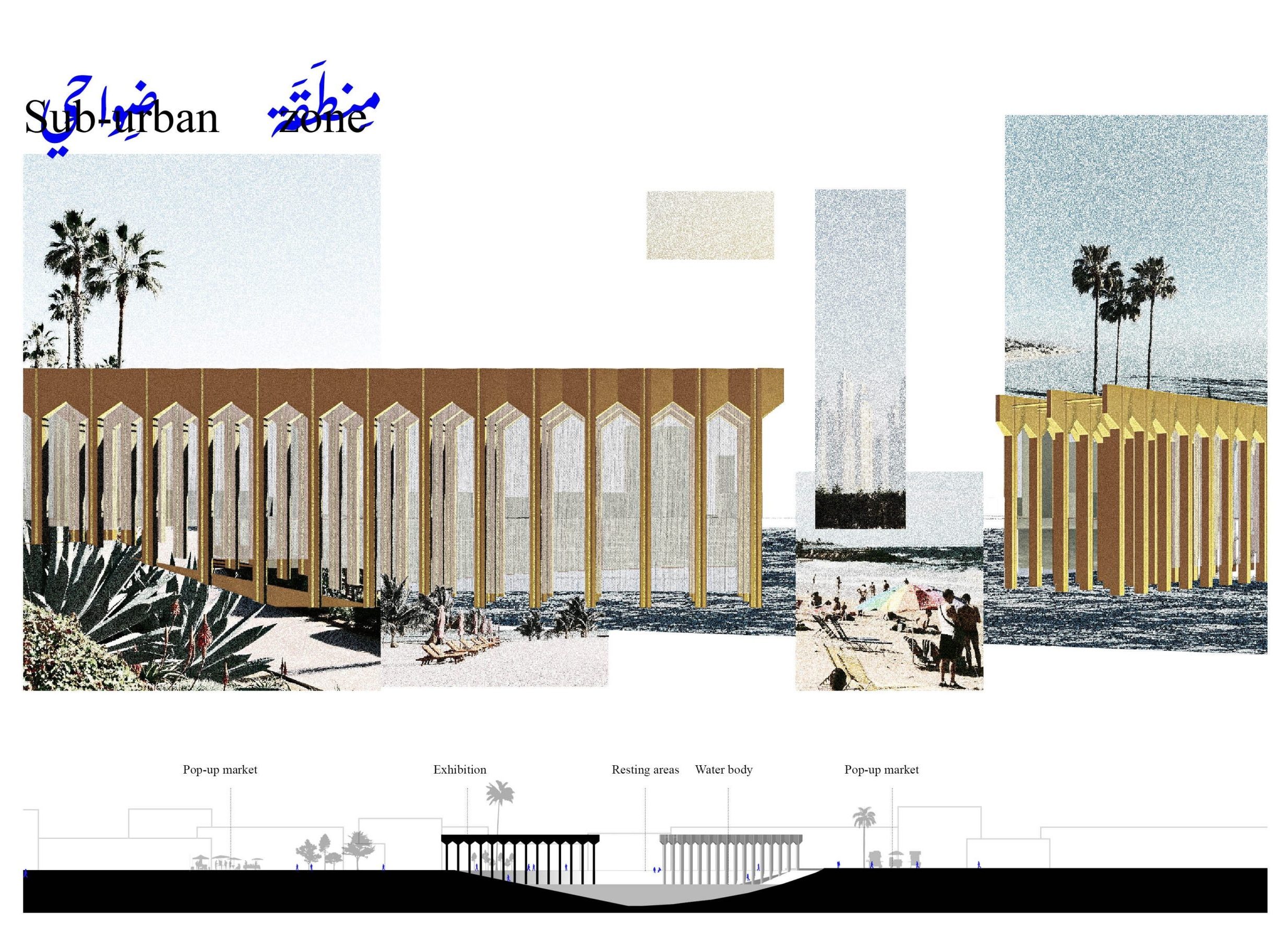
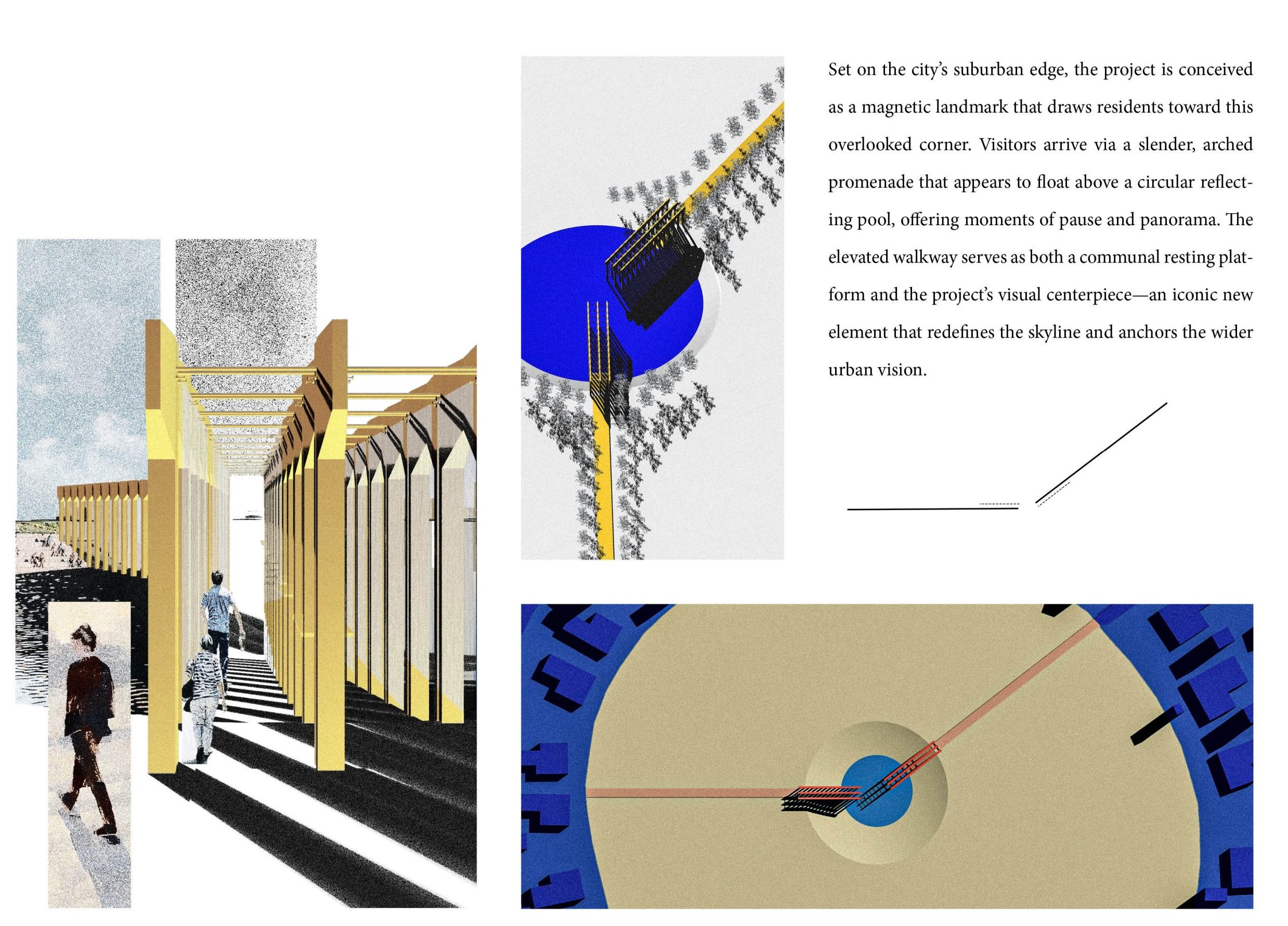
Suburban zone intervention
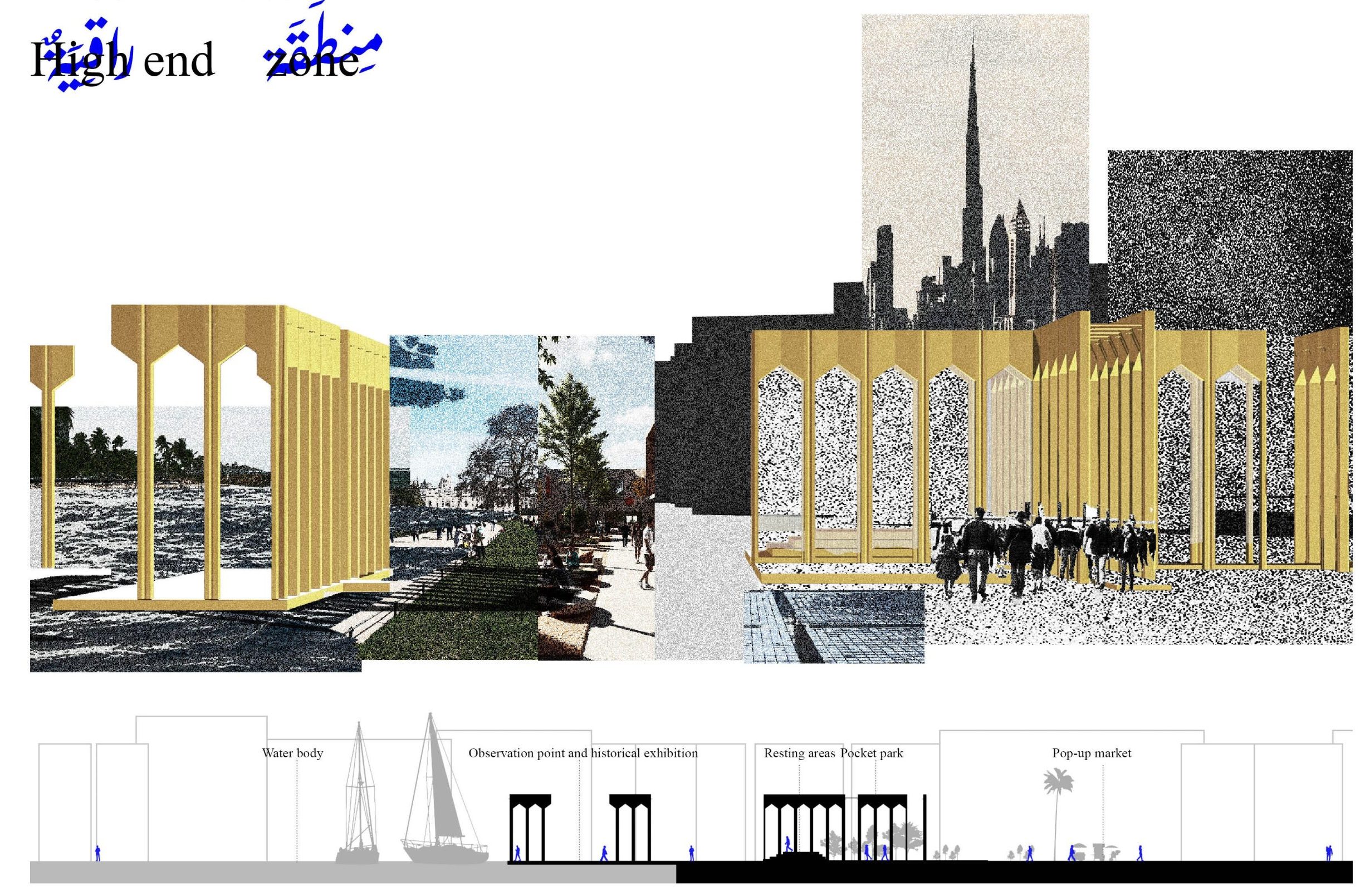
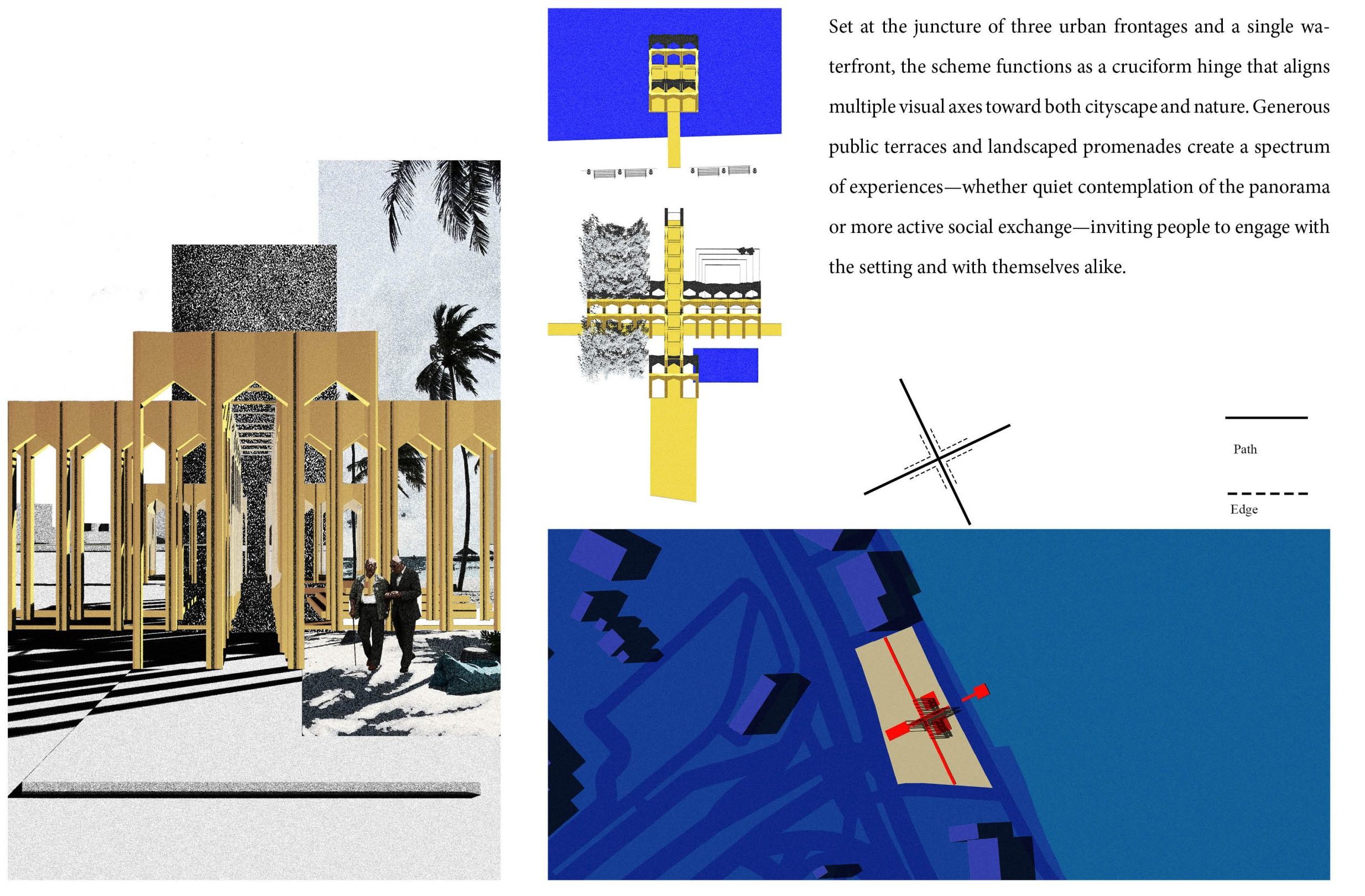
High-end zone intervention
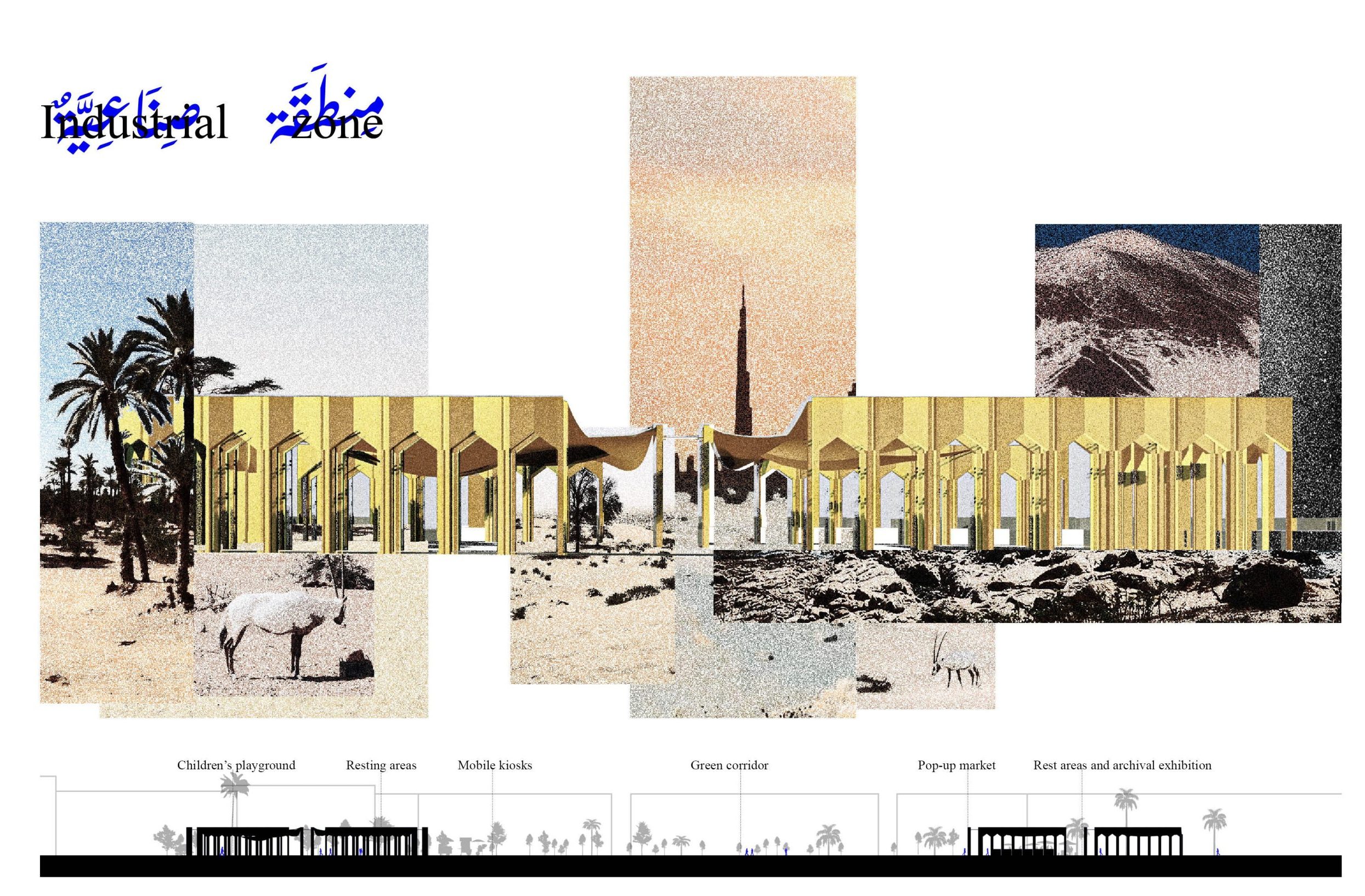
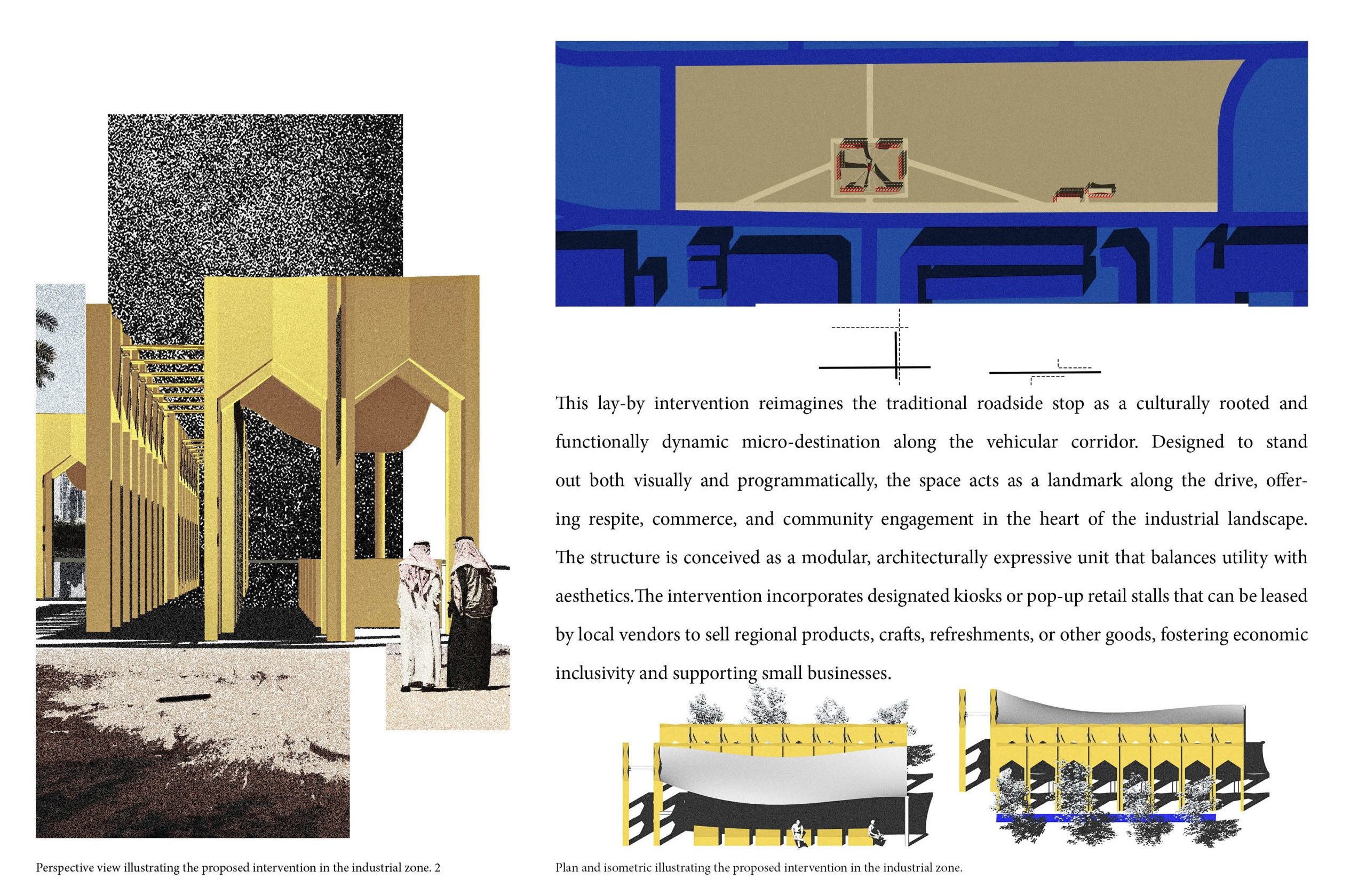
Industrial zone intervention
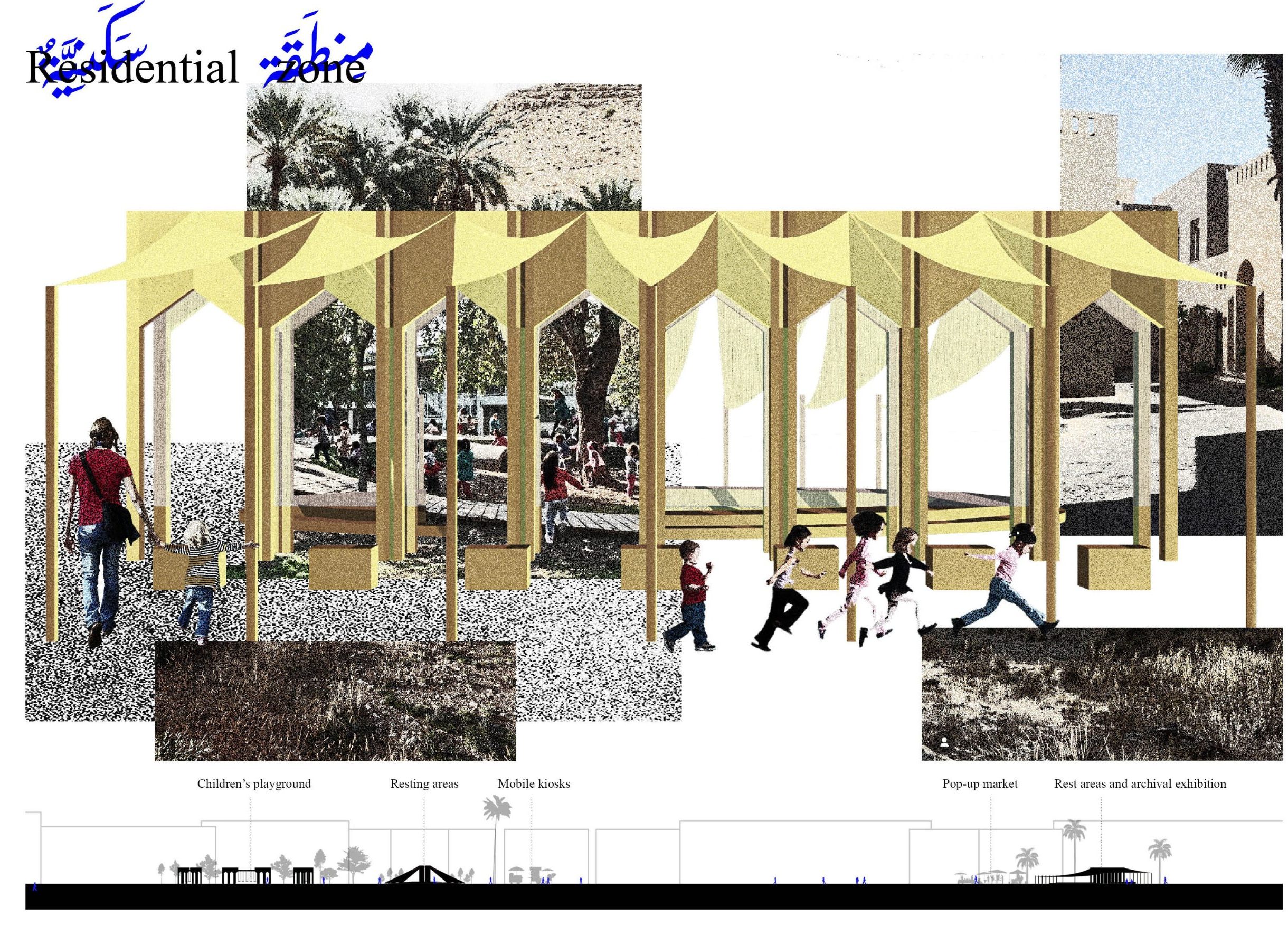
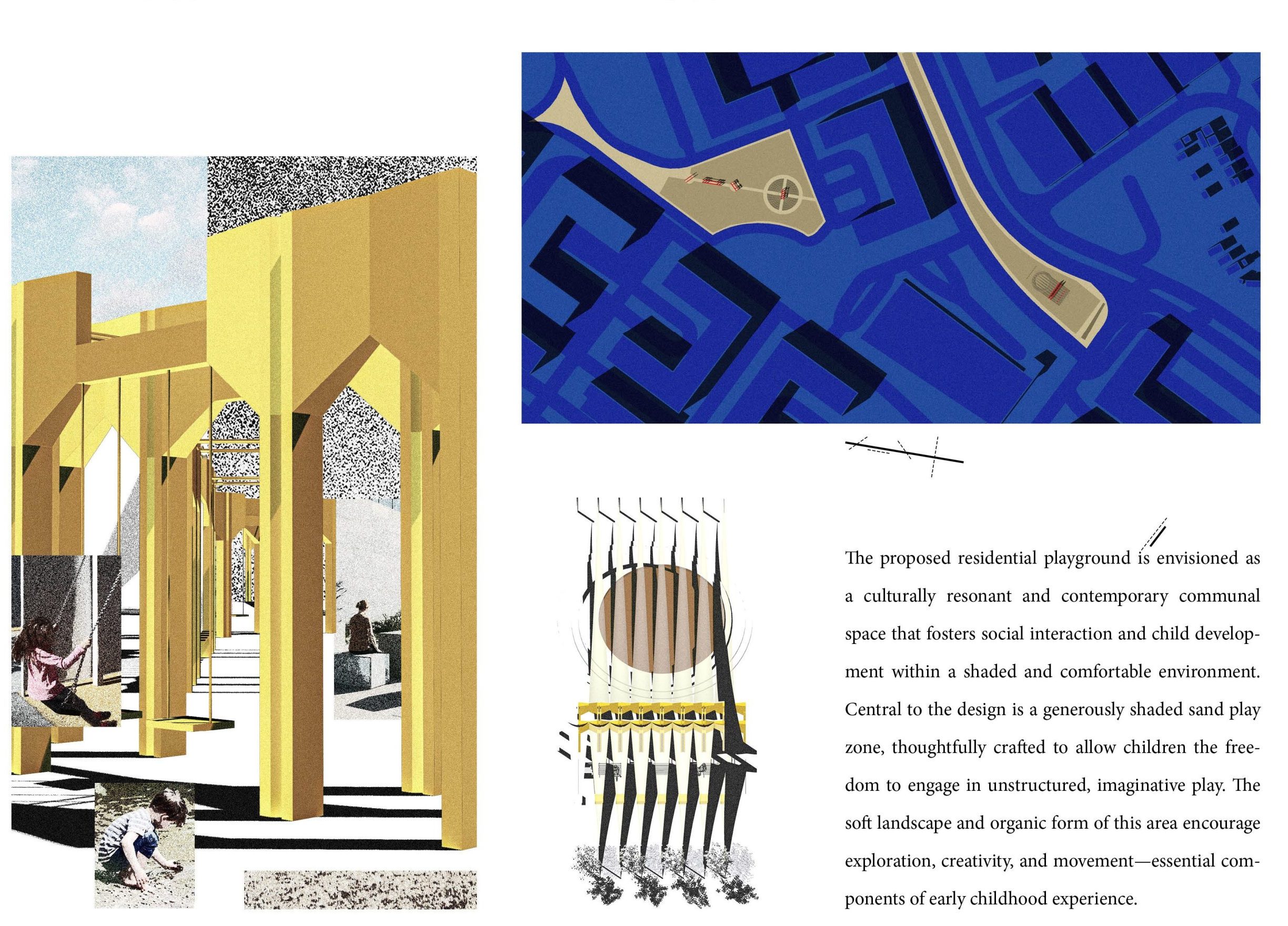
Residential zone intervention
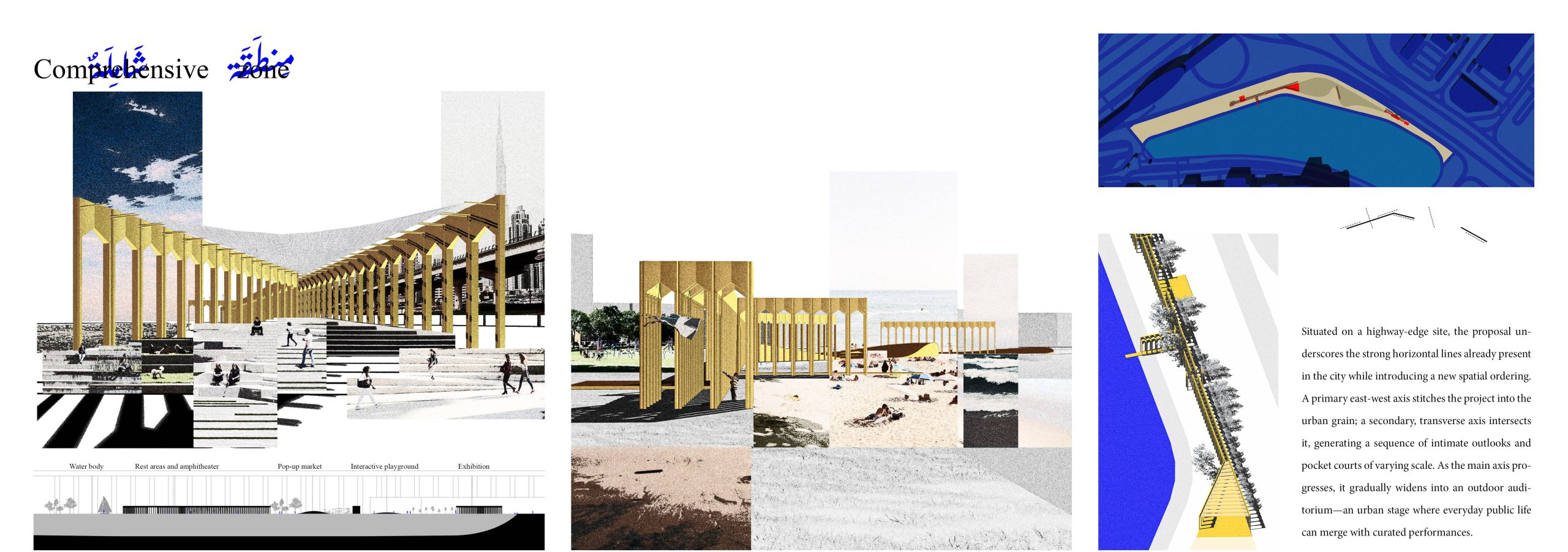
Comprehensive zone intervention
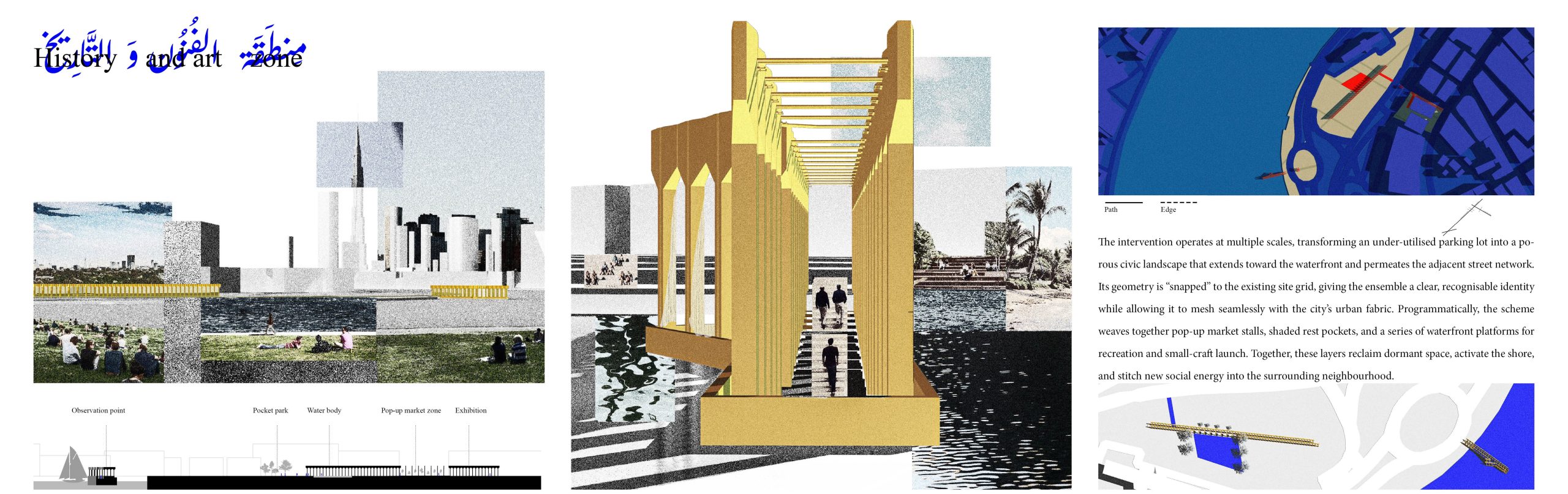
History and art zone intervention